Handmade vs Mass-Produced Pet Accessories – Is the Price Difference Worth It?
Your dog doesn’t know the difference. The R89 bandanna from Shein and the R139 handmade from George feel identical to him. The difference is whose hands made it and whose pay cheque came from that sale. Honest framing earns trust, so let’s actually compare handmade vs mass produced pet accessories without the usual sales talk.
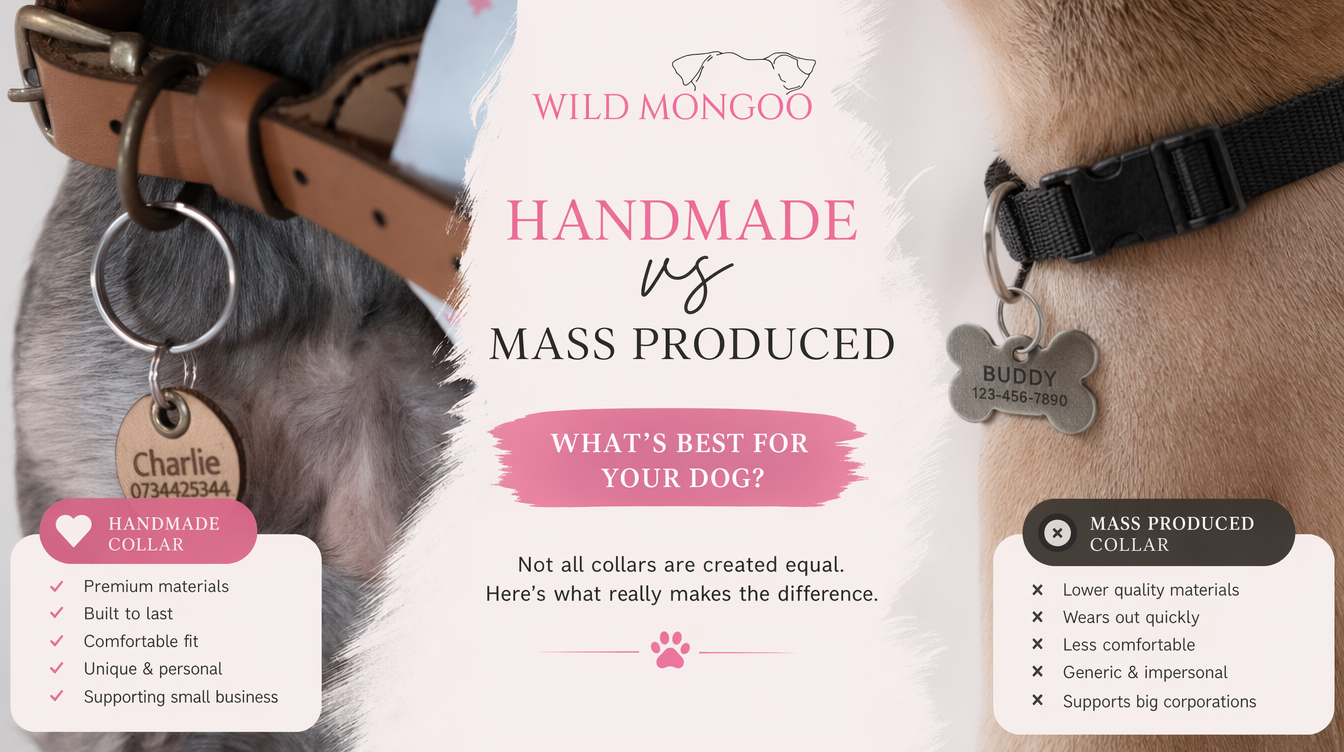
This isn’t a “handmade good, factory bad” sermon. Mass-produced has real wins. Handmade has real wins. The question is which trade-offs you’re happy to make, and for which products it actually matters. Here’s the straight version, with real Rand figures from the SA market in 2026.
The Honest Truth – Your Pet Doesn’t Know the Difference
Let’s get this out the way first. Your Jack Russell does not care whether his bandanna was cut on a laser machine in Guangzhou or stitched in a small workshop in George. He cares about smells, snacks and whether you’re about to take him for a walk. That’s it.
So if the argument for handmade is “your dog will notice” – it isn’t. And pretending otherwise is exactly the kind of guilt-trip marketing nobody needs. A R89 bandanna and a R139 bandanna both tie around a neck, both look cute in photos, both end up smelling vaguely like pond water within a week.
The difference is entirely on the human side of the leash. Whether that matters to you is a personal call, not a moral test.
But You Do – Five Differences You’ll Actually Notice
Even if your dog can’t tell, there are five practical differences humans clock almost immediately:
- Stitch density. Mass-produced goods run at about 8-10 stitches per inch to keep production fast. Handmade typically runs at 12-14. You notice after about three washes.
- Hardware quality. Cheap D-rings bend. Cheap buckles crack when your Staffie lunges at a cat. Handmade hardware is usually solid brass or stainless, and you feel the weight in your hand.
- Fabric. A R89 bandanna is often thin lightweight cotton that pills, fades and curls at the edges after a few washes. Ours are cut from Scuba – a structured double-knit fabric that holds its shape, doesn’t fray, and looks crisp wash after wash.
- Personalisation. Mass-produced gives you eight stock names printed on a collar. Handmade gives you whatever you can type, engraved or embroidered the way you want.
- Repair-ability. A hand-stitched collar can be re-stitched. A moulded plastic collar gets binned.
None of this makes mass-produced “bad”. It makes the two products different tools for different jobs.
The Price Breakdown – Where Your Rand Actually Goes
This is the part most brands hide. Here’s roughly where R139 on a handmade SA bandanna lands versus R89 on an imported one:
| Cost slice | R89 mass-produced | R139 handmade (SA) |
|---|---|---|
| Raw materials | R12 | R38 |
| Labour (person who made it) | R4 | R42 |
| Factory / workshop overhead | R8 | R18 |
| Shipping / import / duty | R25 | R6 |
| Retailer margin + marketing | R40 | R35 |
The gap of R50 isn’t going into a markup. It’s mostly going into the two line items that keep a small SA workshop alive: materials that don’t fall apart, and a living wage for the person behind the sewing machine. That’s the bit worth being honest about.
Why Mass-Produced Wins on Some Things
Here’s where most “buy handmade” posts fall over – they pretend mass-produced has no upside. It does. Give credit where it’s due:
- Price. If your budget this month is tight and your dog needs a new collar today, a R89 Shein or Takealot option is a legitimate answer. Nobody should feel bad about it.
- Speed. Next-day delivery from a big warehouse beats a 7-10 day handmade lead time. If your dog-sitter loses the harness on a Tuesday and you need one Thursday, mass-produced wins.
- Variety. Thirty colours, eight sizes, fifteen prints, all in stock. Small workshops can’t match that catalogue depth, and that’s fine.
- Consistency. Factory output is uniform. If you want two matching bandannas identical to the millimetre, that’s mass-production’s home ground.
- Disposable use cases. Puppy chewing phase. Short-term growth from 3 to 6 months. A seasonal Christmas bandanna that’ll live in a drawer. You do not need museum-grade stitching for that.
So no – don’t feel guilty about mass-produced for the right job. It exists for a reason.
Where Handmade Wins Every Time
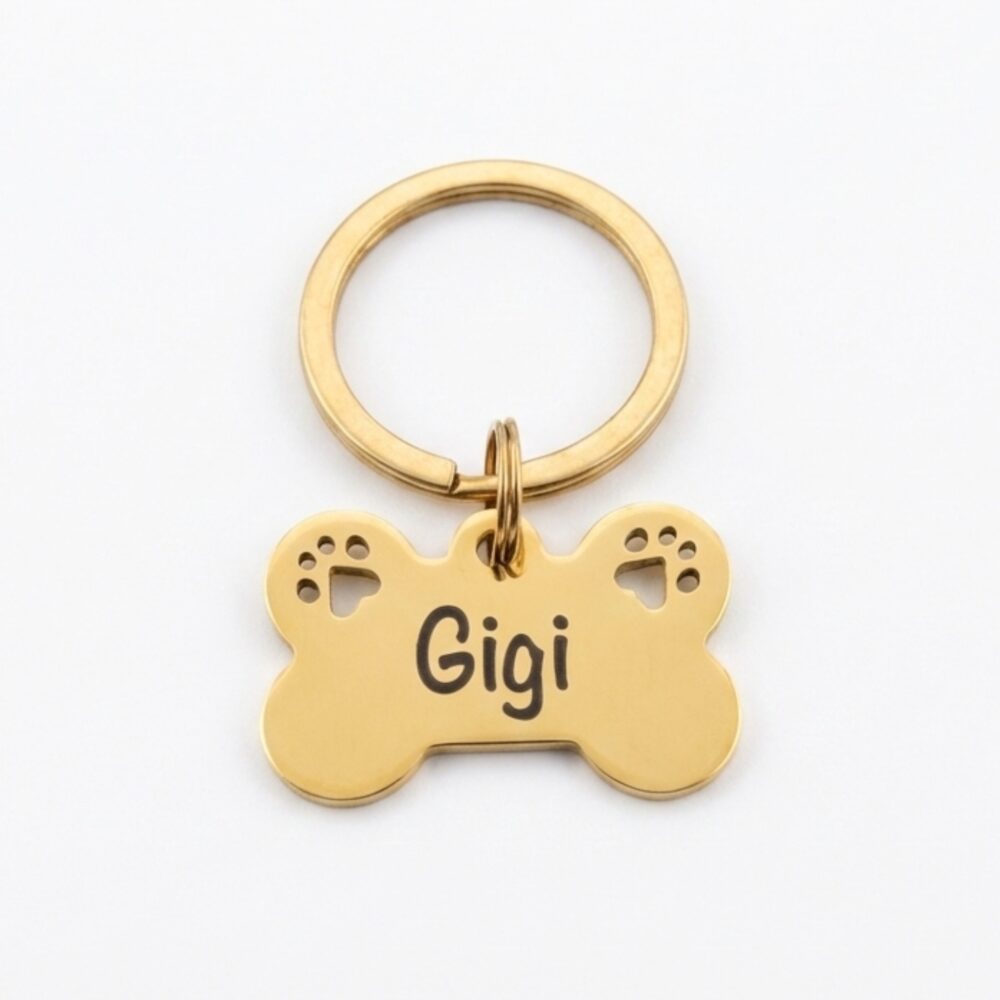
Flip side. There are categories where the extra Rand genuinely earns its keep, and personalisation sits right at the top. When you’re putting your dog’s name on something, the difference between “eight preset names on a dropdown” and “type whatever you want and have it hand-embroidered” is a whole different product. A proper personalised bandanna with your dog’s actual name, stitched in thread that won’t peel after three washes, is the category-defining example.

Personalised Pet Bandanna
Your dog’s name, hand-embroidered on a structured Scuba bandanna they’ll live in. Made in George.
Durability is the other one. Anything your dog puts pressure on – collar, leash, harness – is where cheap hardware turns into a genuine safety problem. A moulded plastic buckle on a 30kg Ridgeback mid-lunge is not the same product as a solid brass buckle hand-sewn onto marine-grade rope. One is a R120 insurance policy waiting to fail, the other is a collar you’ll still be using in 2031. For medium to big dogs especially, a proper rope collar is where spending up actually pays back.

Dog Rope Collar
The confident, everyday rope collar. Strong hardware, soft on the coat, made in George.
Then there’s the story. Handmade comes with one. Mass-produced doesn’t. If you’re buying a gift, wrapping it for a friend’s new puppy or a 40th birthday for the dog mom in your life, “I got this from a women’s workshop in George” lands differently to “I got this from the first link on Takealot”. Same product shape, totally different gift.
The SA Context – Supporting Local in the Rand Era
In 2026 the Rand is doing what the Rand does. Imported goods are getting more expensive by the month. And every handmade purchase made in SA keeps money circulating here instead of flowing out to a factory 10,000km away.
That’s not a guilt pitch. It’s a maths one. When you buy a handmade bandanna from George, the labour Rand goes to a woman who spends it at her local spaza, her kid’s school, her Checkers. Multiply that by a few thousand customers and you have a small workshop that keeps ten or fifteen households stable through a tough year.
Buy the Shein one when you need to. Buy the local one when you can. Neither makes you a hero or a villain. Spread your spend across both and you’re doing fine.
How to Spot Real Handmade vs Mass Produced Pet Accessories
“Handmade” is an abused word. Here’s a quick checklist you can run in 30 seconds before buying:
- Named maker or workshop. Real handmade names the person or the small team. Vague “artisan crafted” with no location is a red flag.
- Lead time. Real handmade has a lead time – usually 3 to 10 working days for personalised items. If it ships same-day from a warehouse of 50,000 units, it isn’t handmade.
- Stitch check. Zoom in on the product photo. Are the stitches even but slightly varied in length? That’s a human. Perfectly identical stitches at machine speed are a factory.
- Small batches. Real handmade sells out of colourways and restocks in small runs. Infinite stock in every variant is a factory behind the scenes.
- Price honesty. A “handmade” collar at R49 isn’t handmade. The labour alone costs more than that in SA.
FAQ
Is handmade really better quality than mass-produced?
Sometimes, not always. Handmade usually wins on stitch density, hardware grade, fabric weight, and repair-ability. Mass-produced wins on consistency and speed. For pressure-bearing items like collars and leashes, handmade quality tends to pay off. For seasonal or short-use items, mass-produced is often perfectly fine.
Why are handmade pet accessories more expensive in SA?
Most of the gap is labour and materials, not markup. A handmade bandanna from George pays a woman a proper hourly rate, uses heavier fabric, and uses better thread. A R89 imported version pays about R4 in labour because it’s made at factory scale somewhere with a much lower cost of living.
Can I tell the difference between handmade and ‘handmade-style’?
Usually yes, within 30 seconds. Check for a named maker or workshop, a realistic lead time (3-10 working days), slightly varied stitch length, and small-batch restocks. Anything that ships instantly in unlimited quantities isn’t really handmade – it’s machine-made with a handmade marketing label.
Is it wrong to buy mass-produced pet stuff?
No. Budget is real and not every item needs to last a decade. Buy mass-produced for puppy growth stages, seasonal novelty items, and when you need something tomorrow. Buy handmade for personalised gifts, everyday collars and leashes, and anything you want to actually keep.
Do handmade pet accessories last longer?
On average, yes – especially collars, leashes, harnesses and beds, where stitch density and hardware quality matter. Our workshop customers often report 3-5 years of daily use out of a handmade rope collar, versus 6-18 months on a comparable imported one. Your mileage varies with dog size and chew habits.
Does buying handmade in SA really help local?
Yes, directly. A handmade purchase from a George workshop pays an SA maker an SA wage that gets spent at SA shops. It’s not charity, it’s just the Rand staying in the country. No guilt required, but it’s a real effect when enough people choose it for the right items.